
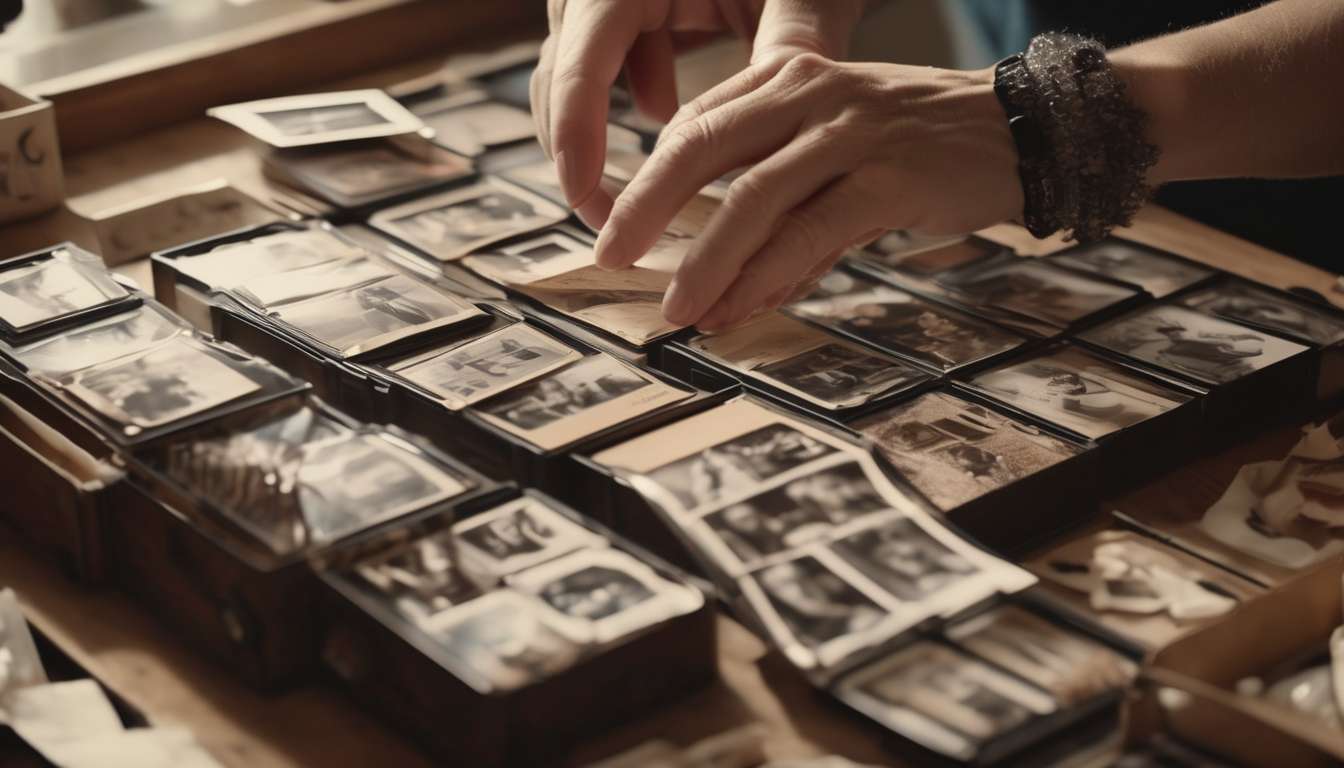
Many institutions have underestimated the archival value of adult film industry records.
We argue these records are essential to an accurate cultural and economic history.
Preserving ledgers, contracts, correspondence, and promotional materials reveals:
- Labor practices
- Technological adaptation
- Shifting social mores
As archivists, historians, and technologists, we recognize key challenges:
- Stigma — public and institutional bias that discourages collection and study.
- Legal concerns — consent, obscenity laws, and rights issues that complicate acquisition and access.
- Fragile media formats — deteriorating film, tape, paper, and early digital files requiring specialized preservation.
We insist that ethical digitization and access frameworks can:
- Protect privacy through redaction, embargoes, and controlled access.
- Enable research by creating discoverable, well-documented surrogates.
By treating these collections with the same rigor applied to mainstream cinema and other commercial enterprises, we:
- Expand the documentary record.
- Confront biases that have rendered significant aspects of media production invisible.
Our work documents not only the content but the business systems that sustained an industry through:
- Censorship
- Regulation
- Digital disruption
In doing so, we recover voices and data that inform broader narratives of labor, commerce, and cultural change.
Historical Significance
We recognize that preserving adult film business records fills a crucial gap in the historical record by documenting industry practices, labor relations, and cultural attitudes that mainstream archives often overlooked.
We see adult film archives as communal memory projects where business records preservation lets us tell fuller stories about creators, distributors, and workers.
We value records that reveal decision-making, contracts, and economic pressures, and we demand rigorous access and privacy controls so contributors feel safe sharing sensitive materials.
By balancing openness with confidentiality, we create spaces where researchers, community members, and industry participants can connect without fearing exposure.
We acknowledge past erasure and commit to ethical stewardship that centers dignity and consent.
Our approach treats these archives not as curiosities but as vital sources for understanding cultural history, regulation, and technological change.
Together we’ll curate responsibly, build trust, and ensure these records inform scholarship and public dialogue while protecting the people they represent.
Types of Business Records
We will catalog a range of business records—contracts, financial ledgers, distribution agreements, correspondence, marketing materials, and production logs—that together map how the industry operated.
We gather contracts and distribution agreements to trace relationships and revenue flows.
We include ledgers and invoices to reconstruct economic realities.
Correspondence reveals decisions, negotiations, and networks.
Marketing materials and publicity documents show audience engagement and branding strategies.
Production logs, call sheets, and payroll records document workflows and personnel roles.
In our adult film archives work, we frame these documents for long-term access while prioritizing business records preservation best practices.
We build descriptive metadata so community members can find relevant files.
We implement access and privacy controls to protect sensitive personal and commercial information.
By treating records with care and clear rules, we create a trusted repository where researchers, former workers, and community members feel welcome and represented.
Together, we maintain a precise, accountable record of an often-overlooked sector.
Legal and Ethical Issues
We must navigate a complex web of laws, ethical responsibilities, and community expectations to preserve these records responsibly.
We recognize that adult film archives carry sensitive personal and commercial information, so our approach to business records preservation balances transparency with protection.
We commit to clear policies that respect performers, staff, and audiences while documenting industry history.
Access and privacy controls
- We’ll implement access privacy controls that limit who can view identifying data.
- We’ll set vetting standards for researchers.
- We’ll allow non-sensitive materials to inform scholarship and community memory.
Legal and consent frameworks
- We’ll comply with copyright, contract, and privacy laws.
- We’ll create consent-based retention rules where possible.
- We’ll establish review processes to respond to takedown requests, legal challenges, and evolving norms.
Governance and community trust
- We want contributors and users to feel included and safe, so we’ll publish governance criteria and invite stakeholder input.
- By centering ethical stewardship alongside legal compliance, we’ll sustain a trustworthy adult film archives program that honors people and preserves institutional knowledge.
Preservation Challenges
Preserving these materials presents multiple technical, legal, and ethical challenges that require coordinated policies and resources.
Technical challenges:
- Fragile media and obsolete formats complicate long-term access.
- Inconsistent metadata makes discovery and provenance verification difficult.
- Actions needed:
- Create comprehensive inventories.
- Prioritize stabilization and digitization of at-risk items.
- Implement sustainable storage strategies (redundancy, format migration, checksums).
Legal and rights-management issues:
- Business records, contracts, and performer consent must be documented to ensure materials can be used without legal or ethical harm.
- Actions needed:
- Record provenance and chain of custody.
- Maintain up-to-date rights and consent documentation.
- Develop retention and takedown policies that respect contractual and privacy obligations.
Access and privacy controls to build community trust:
- Tiered access and authenticated request procedures balance scholarly use with privacy.
- Redaction protocols protect individuals when necessary.
- Actions needed:
- Define access levels (public, restricted researcher, closed).
- Establish application and review workflows for restricted access.
- Create standardized redaction and anonymization guidelines.
Funding and institutional commitment are practical hurdles.
- Advocate for grants and shared infrastructure to avoid duplication and ensure continuity.
- Actions needed:
- Pursue collaborative funding models and cost-sharing.
- Develop sustainability plans for staffing and technical upkeep.
Collaborative governance is essential for transparent, values-driven stewardship.
- Bring together archivists, legal advisors, industry representatives, and affected communities to craft policies.
- Actions needed:
- Establish a governance body with diverse representation.
- Regularly review policies for legal, ethical, and technological changes.
- Document decision-making and make policies publicly available where appropriate.
Digitization Best Practices
We prioritize standardized digitization workflows to ensure long-term usability and legal compliance.
- Core steps include condition assessment, high-quality capture, metadata creation, and secure storage.
- We calibrate scanners and cameras and document physical states so the collection’s authenticity is preserved.
- We capture masters and derivatives to make materials both authentic and searchable.
We create consistent metadata schemas that reflect provenance, rights, and context.
- Schemas ensure discoverability and community ownership so every colleague and contributor can feel the collection belongs to them.
- Metadata records cover provenance, rights, descriptions, and contextual information.
We follow file-format standards, checksum generation, and redundancy practices to reduce risk.
- File-format standards support long-term accessibility and interoperability.
- Checksums and integrity checks detect corruption early.
- Redundancy (multiple copies, geographic separation) mitigates loss.
We implement controlled handling procedures and logging to protect originals while enabling surrogate use.
- Access controls and handling protocols minimize wear and damage.
- Activity logs and chain-of-custody records maintain accountability and traceability.
We train staff in ethical considerations and chain-of-custody practices, and maintain clear documentation.
- Training covers ethics, legal issues, and technical procedures so staff can participate confidently.
- Comprehensive documentation supports onboarding and consistent practice.
We coordinate with legal and IT teams and perform regular audits and refresh cycles.
- Legal and IT coordination ensures descriptions, storage, and access comply with regulations and institutional policies.
- Scheduled audits and format migration/refresh cycles keep content accessible and intact without compromising professional standards or community trust.
Access and Privacy Controls
We set clear, tiered access policies and privacy safeguards that balance researcher needs with the rights and safety of contributors.
We design tiered permissions so community members, scholars, and staff can access appropriate materials without exposing sensitive personal data.
We sanitize or redact metadata and files where necessary in our adult film archives, and we document restricted-use designations so everyone knows why items aren’t public.
We apply consistent business records preservation principles to retention schedules, anonymization, and logging access requests.
We require vetted accounts for higher-level access.
We use time-limited secure links for sensitive content and maintain auditable trails to protect both contributors and researchers.
We invite stakeholders to review access policies regularly.
- Contributors and community representatives help shape who sees what.
- Stakeholder review ensures policies stay responsive and appropriate.
By centering respect, safety, and transparency, our access and privacy controls foster trust and belonging while ensuring that business records preservation proceeds responsibly and ethically.
Research and Scholarship Uses
We support a wide range of research and scholarship uses.
From legal and economic studies to cultural and performance analysis, we welcome scholars, community historians, and industry researchers to work with adult film archives as shared resources for rigorous inquiry.
We require that projects respect contributor privacy and institutional access policies.
Our access framework balances open inquiry with privacy controls that protect personal data and sensitive business information.
Our collection strategy prioritizes business records preservation.
This lets researchers trace contracts, accounting, and distribution networks that shaped the industry.
We establish clear procedures for requesting materials.
- Request protocols outline eligibility, required documentation, and review timelines.
- Tiered access agreements permit research teams to analyze trends without exposing identities.
- Where appropriate, we provide anonymized datasets on request.
We offer collaborative services and training to support ethical research.
- Collaborative reference services help researchers navigate collections and interpret materials.
- We facilitate interdisciplinary projects that center lived experience and ethical use.
- We provide training on handling sensitive content and on responsible stewardship of archives.
Our goals are to build a supportive research community and model responsible stewardship.
By combining access controls, preservation of business records, collaborative support, and training, we advance knowledge, honor contributors, and protect sensitive information.
Institutional Advocacy
We advocate within universities, libraries, and funding bodies to secure recognition, resources, and legal protections that let these collections be preserved and responsibly studied.
We build coalitions with archivists, scholars, and community members to argue that adult film archives are cultural records deserving of careful stewardship.
We push for institutional policies that prioritize business records preservation alongside audiovisual materials, ensuring:
- clear provenance and standardized metadata,
- policies for sustainable digital infrastructure,
- retention and transfer practices that protect context and authenticity.
We negotiate clear access and privacy controls that balance researcher needs with performer and contributor protections. Our proposals include:
- tiered access levels (open, restricted, closed),
- anonymization and redaction practices where appropriate,
- legal frameworks and risk-reduction agreements for repositories and users.
We train staff and donors in ethical intake practices so collections enter institutions with proper consent documentation and use agreements. Training covers:
- documentation of provenance and rights,
- expectations for donor restrictions and transfers,
- handling of sensitive personal data.
We lobby for dedicated funding lines and curriculum recognition so preservation work is resourced and integrated into academic programs.
We create inclusive spaces and institutional commitments that make colleagues feel supported in preservation efforts, strengthening the responsible support and accessibility of adult film archives and their business records under thoughtful safeguards.
How much does it cost to access or obtain copies of materials from a digital archive of adult film business records?
We wonder about costs for accessing or getting copies of materials, and we’ll outline usual charges.
Typical pricing structure:
- Free access: Many digitized items are often available online at no charge.
- Paid copies: High-resolution downloads or physical copies usually incur fees.
- Additional fees: Reproduction, handling, and shipping add to the cost.
- Special requests: Unusual formats, rights clearance, or extensive staff time may require permissions or paid staff time.
Recommendation:
- Contact the archive to obtain exact rates.
- Ask about discounts, grants, or community access options that might reduce costs.
Are there any special formats (video, legacy file types, proprietary databases) that researchers should be aware of when requesting materials?
Question: Do special formats (video, legacy files, proprietary databases) need attention when requesting materials?
Yes. Archives frequently hold a mix of digitized and original analog media that can require extra handling and planning.
Common issues to consider:
- Video formats: digitized files and original tapes (VHS, Betacam, U-matic, etc.) may need specific playback hardware and capture setups.
- Obsolete codecs and file wrappers: files may not play on modern systems without legacy codecs or conversion.
- Legacy and proprietary databases: exports often require the original application or special import tools to interpret structure, relationships, and metadata.
- Other legacy files: old document formats, image formats, and project files (e.g., early multimedia authoring formats) may be unreadable without original software or conversion.
Questions we’ll ask when you request materials:
- What specific formats or media types are included (file extensions, tape types, database systems)?
- Do you have permission to convert or transcode files if needed?
- Will you require original playback hardware or software environments?
- Do you need preserved copies of original media in addition to converted/access copies?
- Are there access restrictions, licensing, or privacy concerns that affect format handling?
What we can offer and collaborate on:
- Format negotiation: we’ll work with you to decide acceptable delivery formats (preservation masters, access derivatives, container/codec choices).
- Guidance on compatible tools: recommendations for players, codecs, and import/export tools that are known to work with the formats in question.
- Digitization and technical support: arrange on-site or vendor digitization for analog media, and provide technical assistance for exports or migrations of proprietary databases.
- Documentation and verification: produce checksums, format reports, and simple playback tests so you can verify accessability.
If you can provide a list of sample file extensions, tape types, or the database platform(s), we’ll give a concrete plan outlining required hardware/software, estimated effort, and any permissions needed.
What steps should donors take to prepare their materials before donating them to an archive (e.g., inventory templates, recommended labeling, physical packaging)?
Practical prep steps donors should take before donating materials
Inventory items using a simple spreadsheet
- Include: description, date, format, and condition.
- Purpose: creates a clear record for donors and receiving institutions.
Label boxes and files with unique IDs and brief content notes
- Use consistent ID scheme and note any sensitive or restricted content.
- Purpose: speeds processing and reduces loss or misplacement.
Use archival-quality enclosures and protective packing
- Use acid-free folders and sturdy boxes.
- Add cushioning for fragile media (e.g., bubble wrap, foam).
- Purpose: prevents deterioration and physical damage during transport and storage.
Include playback notes or software requirements
- Document necessary hardware, file formats, codecs, or passwords.
- Purpose: ensures materials remain accessible and usable.
Separate personal duplicates and non-archival items
- Remove duplicates, routine office supplies, and trash before donation.
- Purpose: reduces processing burden on the archive and focuses on unique materials.
Contact archivists for accession guidelines before donating
- Ask about preferred file formats, naming conventions, and any restrictions.
- Purpose: ensures your gift is accepted, properly described, and respected.
Final note: Preparing materials carefully and communicating with the receiving institution helps preserve context, accessibility, and long-term value of donated collections.
Conclusion
You’ve shown how digital archives can preserve the business records of adult film enterprises while honoring historical significance, ethical responsibilities, and legal constraints.
By applying careful digitization practices, robust access and privacy controls, and clear provenance, you’ll protect sensitive materials and support legitimate scholarship.
You’ll also need to build institutional advocacy to secure resources and acceptance.
With thoughtful policies and collaboration, these archives can responsibly serve researchers, historians, and the public without compromising individuals’ rights.